A fence is just one of those tasks that feels simple until you live with the information. The message spacing looks fine from the sidewalk, however a year later on you observe eviction emphasizes wintertime, the pickets don't align after a regrade, or the bolts are currently loosening. The distinction between a fine fence and a "we made the ideal phone call" fence is typically what happens prior to you authorize off.
If you hired a solid team, the final walkthrough should feel almost routine: dimensions on site, clean documentation, and a contractor who can describe specifically what they did and why. If it feels hurried or obscure, that is your sign to decrease, verify, and ask for modifications while everything is still accessible.
Below is a sensible, owner-friendly list you can use with the most effective fencing contractors and the best fencing installers you are vetting or presently collaborating with. It is written genuine jobsite conditions, where the ground inclines, materials vary slightly from batch to set, and "adequate" can quickly become a repeating annoyance.
Start with the work data you need to currently have
Before any person swings open up eviction for the final walk, gather the paperwork. A reliable best fencing company does not deal with documents as extra job. They plan for it because it stops misunderstandings and accelerate service warranty service later.
You desire the work file that consists of a minimum of these things. If anything is missing out on, ask for it currently. Not tomorrow, not after the staff leaves.
In a well-run job, you have a site strategy or layout notes, material options, modification order documents, and the range of work you approved. If you paid in phases, you likewise have a repayment timetable straightened with conclusion landmarks. That issues because numerous fence concerns show up at the joints in between phases: areas mounted prior to a last quality modification, gate equipment ordered after a measurement phone call, or article caps included after shade approval.
When you do the walkthrough, keep a folder on your phone or a printed package in your car. You will jump between photos, notes, and the spec sheet without having to think what you agreed to.
Verify the format while it is still fresh in everyone's minds
The most pricey "fix" is not the labor, it is the rework of format decisions that need to have been resolved in the beginning. Throughout the last walkthrough, validate that the fence line matches the approved strategy and the actual residential or commercial property boundaries you intended to follow.
Start by inspecting straight runs initially. Walk the line slowly and search for drift. If you have any sections that are not flawlessly directly, confirm they line up with the prepare for following the quality, stepping around origins, or valuing existing structures. A small curve can be appropriate when the land requires it, but you should not be guessing. The contractor needs to have the ability to point to the referral marks or dimensions they used.
Next, check corners and changes. Fence edges frequently conceal small alignment problems since they are visually forgiving from a distance. Obtain close enough to see whether pickets, rails, or panels meet easily, particularly where the fencing adjustments direction. If you see voids that look larger than your thumb, or rails that rest on a different angle, quit and ask for a description. This is likewise the time to verify that messages are plumb, not just "close."
One proprietor blunder I have seen: individuals focus on look and overlook geometry. The fencing may look decent in pictures, yet if articles are out of plumb or entrances are not square, whatever else becomes tougher to maintain.
Understand what "level" implies for your site
A lot of conflicts originated from a straightforward assumption: proprietors expect the fence to be degree throughout sloped ground. In truth, there are various approaches depending on the fence kind and local tolerances. As an example, shadow gaps on a picket fencing can be intentionally stepped to follow grade, while some panel systems are developed to match a level railway with a base trim that bridges minor quality changes.
During the walkthrough, ask exactly how the group handled the incline you have. If the fencing is developed to "comply with quality," you need to see the rails or pickets relocate a managed, consistent method as opposed to arbitrary dips. If the fencing is created to "tip" at established factors, the actions ought to be spaced practically and mirror the strategy you approved.
This is also where you check the bottom side. Is the bottom rail constantly placed? Are spaces consistent where the fencing approaches the ground? If there is a base skirt or a kick plate, verify it was installed as specified and that it does not develop a noticeable bow.
If you have landscaping, validate the fencing line still deals with it. I have had home owners approve a fencing on bare ground, just to discover the following season's mulch accumulation makes the lower clearance also tight. The very best fencing installers make up regular landscaping thickness at the time of setup, yet it is practical for you to ask what clearance they expected.
Check blog posts, caps, and equipment with the accuracy you would certainly make use of for a railing
Posts take the tons. Also a lovely fence looks wrong when blog posts are a little misaligned or when caps do not rest correctly.
While you stroll the border, take notice of:
- Plumbness of posts, specifically at edges and entrance posts Consistency of blog post height throughout each run Secure seats of post caps, if used Uniformity in rail alignment (or picket alignment for picket-only systems) Hardware condition, including fasteners and hinges
When you look at fasteners, do not simply spot-check. Utilize your phone flashlight at an angle. Loose or poorly seated hardware often reveals itself through inconsistent spacing and small adjustments in the way the head rests versus the material.
If your fencing includes steel or composite components, validate that the installment did not leave sharp sides or incomplete finishes. Ask the specialist what they made use of to safeguard cut ends. Also small noninclusions can cause very early wear.
Walk every entrance like you will certainly use it daily
Gate issues show up quicker than virtually any type of other concern since eviction steps. The last walkthrough is your opportunity to verify feature, alignment, and safety.
Open and close each gateway gradually, then quicker. Do it with different levels of pressure so you can feel binding. An entrance that drags a little when relocated gradually can still become a bigger issue once the latch catches under load.
Verify the lock involvement. The latch must contact the strike point without requiring you to lift or press in a way that changes eviction out of airplane. If the gate closes however does not latch with normal initiative, that is a real issue, not a small inconvenience.
Check the clearance around the gate sides. There must not be scraping on the posts or rails. If you set up weather removing or a bottom move, verify it sits uniformly and that it does not develop a pinch point.
Also check swings. For gateways that are readied to open up towards a lawn or a sidewalk, verify the arc gets rid of the surrounding fencing line. I have seen entrances installed completely straight and still end up capturing on a surrounding section due to the fact that the gap was as well limited at the hinge side.
If you are taking care of a dual entrance, validate both doors open, close, and meet with regular overlap. If the overlap changes depending upon exactly how you push, the gate structures likely need adjustment.
A fast proprietor examination for alignment
Stand where you would certainly stand when you are closing the gate. Try to close it without "aiding" with your hands. If you have to push it in a certain instructions to make the lock catch, request change. The fence must be flexible, not finicky.
Confirm materials match what you chose, down to finish and set differences
Owners in some cases sign off based on the look in one lights problem, then see color inequalities later on. That can be worsened by weather condition exposure and material set variations. The most effective fencing contractors prepare for this, but the final walkthrough is where you confirm the visible surface areas look intentional.
Review the coating uniformity. If you picked a tarnish or paint color, validate it is applied to all required surfaces, consisting of cut ends and equipment get in touch with points. If you selected a powder-coated or pre-finished element, look for scratches or thin spots at corners.
If your fencing is made of timber, check for uniformity in pickets and rails. Various boards can have slightly different grain or shade tones even within the exact same species. The service provider should have the ability to discuss just how they matched product. If you see clearly dissimilar boards positioned beside each various other where they draw focus, ask whether they can switch pieces. This is not concerning requiring excellence, it has to do with accepting the requirement you paid for.
Also look for surface quality. If you see harsh edges, splinters, or damaged coatings, ask for touch-up. For a safety perspective, this matters more than appearance.
Look closely at rail-to-post and picket-to-rail connections
This is where craftsmanship turns up. A fencing can look proper from far away and still fail you at the seams.
For rail-and-post systems, examine the edges and the change points where rails affix to blog posts. Look for constant spacing and straight lines. If your fence makes use of brackets or hidden ports, verify they are seated safely which the holes did not leave imbalance that pulls the rail off axis.
For picket fencings, check the top line. Is it uniform or does it dip in small spots? If the fencing has attractive tops or transmitted profiles, confirm the pattern straightens as intended.
At joints, check for noticeable spaces and inconsistent overlaps. Some gaps are regular relying on the system and manufacturing resistance. The secret is whether the spacing is consistent and within the requirement you were estimated. If you were guaranteed a limited, no-warp appearance, the mounted version should not look like it is drifting.
Understand drain and ground get in touch with, then confirm it matches the plan
One of the most neglected components of a fence is what occurs at the ground line. Water is ruthless. If articles are embeded in a manner in which catches dampness, wood can wear away faster than expected. If there are no barriers or proper backfilling, you might see working out and gaps.
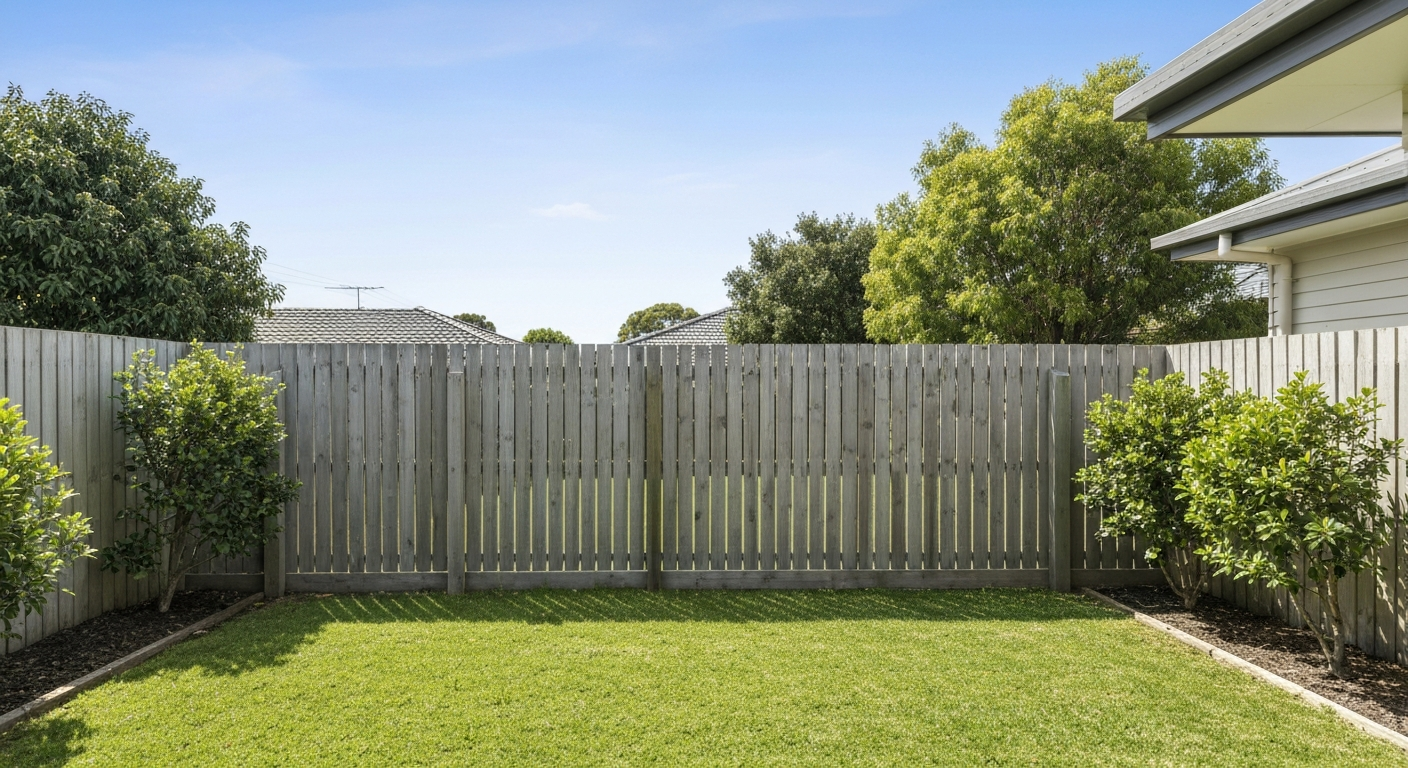
During the walkthrough, ask how the professional dealt with the base. If you have concrete or grounds, confirm they were installed as defined. If blog posts are set in crushed rock or another product, verify the consistency and compaction strategy. Owners do not need to understand every design information, however you should have the ability to ask what was utilized and where.
Also check for visible voids. Go back and look along the bottom edge for irregular settling. If you see one message that sits significantly lower, or a fencing section that dips, that is your Click for info sign to inspect before landscaping hides it.
If the contractor backfilled and after that landscaped right away, ask for how long the area was entrusted to clear up and whether any re-leveling is included. A liable best fencing company must be clear about anticipated settling and what they will do afterward.
Safety and tidiness checks that people avoid, yet must not
A fence job should leave your property much better than it found it. Also if you approve "building mess," you ought to decline debris left in sidewalks, nails in the yard, or incomplete edges that are unsafe to stroll past.
Look for:
- Nails and screws in the ground Broken boards or cracked pickets Exposed sharp steel edges Loose hardware left uninstalled Trash or product packaging left behind in landscaping areas
Also check the access points. If the fencing blocks a course, verify gateways open without blockage. If a fence runs near a driveway, validate the swing does not elbow in into car clearance.
If you have kids or pet dogs, stroll the fencing line with that said in mind. Are there voids large sufficient to produce an escape path? Exist harsh surfaces accessible to little hands? Even when gaps are technically within resistance, you may desire the contractor to get used to lower risk.
Use this brief inquiry checklist before you authorize anything
You can ask these inquiries while the staff is still there and can react accurately. Keep it easy. The objective is clarity, not interrogation.
- What measurements did you use for the last format, and where are the recommendation factors documented? Are all gates square and working within normal operation, not just shut positions? What surface steps were related to reduce ends, hardware contact points, and any kind of fixed sections? How did you manage slope transitions so the fence complies with grade as designed? What does the guarantee cover, and what is the expected timeline for settling-related adjustments?
If you obtain unclear solutions, or if the specialist can not indicate the specific work they carried out, that is important details. Owners are worthy of confidence at the final walkthrough.
Final walkthrough sign-off: what to confirm on every section
Now that you have the materials in mind, the layout validated, and the gates examined, you await a tidy, systematic pass. This is the "sign-off level" inspection that stops the common regrets.
Take your time and verify each fencing run from both instructions. Look for any type of area that shows up somewhat various in shade, positioning, or stalking. Little issues often gather in areas where the ground was hardest: near trees, around elevated beds, or near driveway edges.
Before you request for a final billing, confirm these things below.
- Confirm articles are straight and rails or pickets line up continually from corner to corner. Verify entrance latching, turn clearance, and smooth procedure without scraping or binding. Check equipment is totally mounted, tight, and devoid of apparent problems or missing pieces. Confirm the surface coverage matches what you approved, including cut ends and touch-up areas. Confirm the site is tidy and risk-free, without any particles, nails, or unfinished sharp edges.
If anything fails this check, request corrections prior to payment is completed. A great contractor will treat this as normal and schedule time to take care of concerns without argument.
Watch for the "looks done" catches contractors often fall into
Even high-quality teams can miss things, particularly when multiple staffs or subcontractors touch the exact same jobsite. The last walkthrough is where you catch the catches that are easy to overlook.
One trap is the "panel or rail alignment that looks fine until you look close." Another is "gate operation that feels okay in one instructions, however binds under typical closing." Yet one more is "coating touch-ups that exist just on the components you were standing near."
Here is the pattern I have seen repetitively: the fence is proper in the early morning light, after that you walk back at a different angle and notification disproportion. That is not you being fussy. It is just how darkness disclose alignment.
So do a 2nd pass once the initial pass is done. Stand a minimum of three positions: at the start of the run, at the middle, and near the end. Look back along the fencing line rather than just examining it from above.
Document whatever: images, notes, and a shared understanding
If a concern turns up later, documentation transforms a tense discussion into a straightforward fix. Throughout the final walkthrough, take photos of:
- Gates in open and closed positions Latch and joint areas close up Post tops and any caps Corners and rail-to-post connections Any area that needed change or adjustment from the initial plan Finish touch-up locations
Add a note in your phone with the day's date and the specialist's name. If a warranty claim develops, you can point to specifically what you observed at approval time.
Also maintain your composed extent or agreement useful. If there were adjustment orders, validate they were reflected in the mounted fence. This secures you from "that was discussed informally" excuses later.
Decide just how to manage tiny flaws without shedding momentum
Owners in some cases be reluctant to request for minor repairs due to the fact that they do not wish to seem challenging. The method is to divide aesthetic choice from functional or safety and security problems.
Functional problems consist of gateways that do not lock correctly, blog posts that resolve noticeably in the short-term, rails that do not line up consistently sufficient to create persistent snagging, and loosened or missing hardware.
Safety problems include sharp edges, revealed fasteners, and spaces or contact points that are risky around family pets or children.
Aesthetic distinctions, like slight variations in grain tone or minor darkness spaces, can fall under "typical product variation" depending upon what you were priced quote and what you accepted. A specialist specialist can normally show you just how they matched product and whether the pattern corresponds throughout the run.
If you are unclear, ask the professional to categorize the thing. For instance, "Is this within your installment resistance or will you repair it as component of approval?" That question maintains the conversation grounded.
Aftercare: the last action proprietors control
Your fence is just partially "done" when the team leaves. The initial months matter, especially for timber and layered metals. Ask the specialist what maintenance they recommend for your precise materials and coating. You do not want generic recommendations, you want support connected to what they installed.
You ought to also plan a short check routine. Walk the fencing after hefty rainfall, after initial trimming season, and concerning a month after setup for any early settling signs and symptoms. If your professional provided a post-install modification home window, keep that appointment.
If a gate starts binding later, do not wait as well long. Joints and latches are adjustable, and capturing placement drift very early normally takes less time than remedying a larger misalignment after elements have shifted.
Finally, maintain any remaining hardware or substitute components the specialist consists of. Some groups offer additional fasteners or small matching pieces. That matters for touch-ups later on, particularly for tarnished or repainted systems.
Picking the right professional before the last walkthrough even matters
You requested a last walkthrough checklist, however it likewise helps to comprehend why it is so important to pick the best team in the first place. The most effective fencing contractors bring an attitude that respects owner acceptance. They comprehend that your assumptions ought to be met evidence, not promises.
A best fencing company makes trust with a clean design procedure, regular craftsmanship, and clear solutions. Best fencing installers appear ready, procedure thoroughly, and treat your home like it becomes part of the finished item, not a short-lived workspace.
When you make use of the list above, you provide yourself a straightforward method to confirm what you worked with for. You are not requesting for excellence you are requesting accountability.
If you approach acceptance with a calm, methodical walkthrough, you prevent the two most unpleasant circumstances for owners. One is paying and afterwards going after repairs. The various other is living with something that never really feels fairly right since you did not speak up while it was still easy to fix.
Take your time. Bring the photos and the task file. Test the gates. Examine the joints. And when you locate a problem, request for a modification prior to the fence comes to be irreversible in the only way that matters, your everyday life.
If you desire, tell me your fence type (timber, plastic, aluminum, steel, chain link, or composite) and whether you have gates, an incline, or a corner-heavy format. I can customize the walkthrough indicate the specific failure modes for your system.